
The Night of the Devouring Flame
The Ashes of the Old Ways
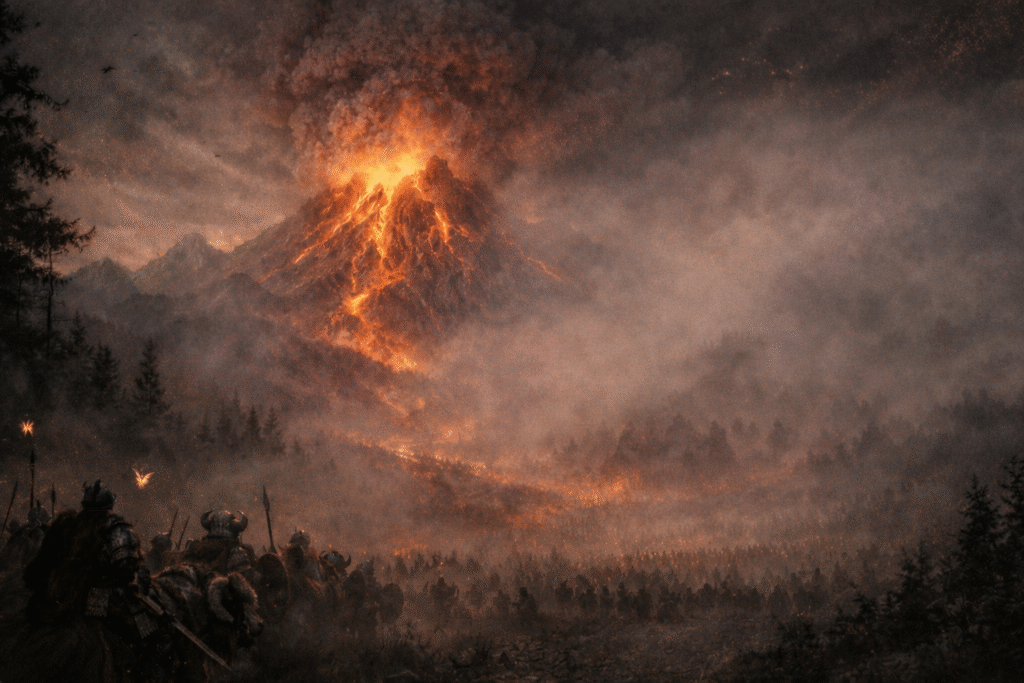
Long before peace ever settled over Vhalandar, in an age now spoken of only in hushed stories, the Vhalandir were far from the gentle people they would one day become. Their tribes clashed endlessly; for land, for survival, but mostly for pride. The forest groaned with the weight of their feuds, the rivers turned dark where battles raged, and the mountains echoed with the ringing of their weapons.
And then one tribe crossed a line no one believed possible.
Desperate to dominate the others, they reached for forces that had long been forbidden. They summoned what should never have been summoned, bargained with powers that spoke in whispering shadows, and wielded magic that clung to their souls like smoke. With necromancy, with conjurations, with rites carved from pages best left unread, they became terrifyingly strong.
The other tribes, alarmed and outmatched, did the one thing centuries of war had never produced: they united.
Faced with an enemy wielding unnatural forces, the Vhalandir gathered their strength and struck back as one. The battle that followed scorched forest and stone alike, leaving the earth split and steaming beneath the weight of their clash. At last the corrupted tribe began to buckle under the unity they had once sought to shatter.
But even as the tide turned against them, a small remnant broke away and fled into the high passes of Eryndal. Silent, unseen, they slipped into the mountains and vanished without a trace.
The Vhalandir did not recoil from what had happened; instead, they rose from the ashes of that final battle with a clarity they had never known. Standing together, tribes that had once fought for every acre realized how effortlessly they had triumphed when united. They came to understand that their true strength had never lain in dominance or endless rivalry, but in the simple fact that they stood stronger together than apart.
So they laid down their weapons and forged a pact that bound every tribe: never again would Vhalandir blood be spilled by Vhalandir hands, and never again would they lean upon the dangerous lure of magic. From that vow grew a new way of life.
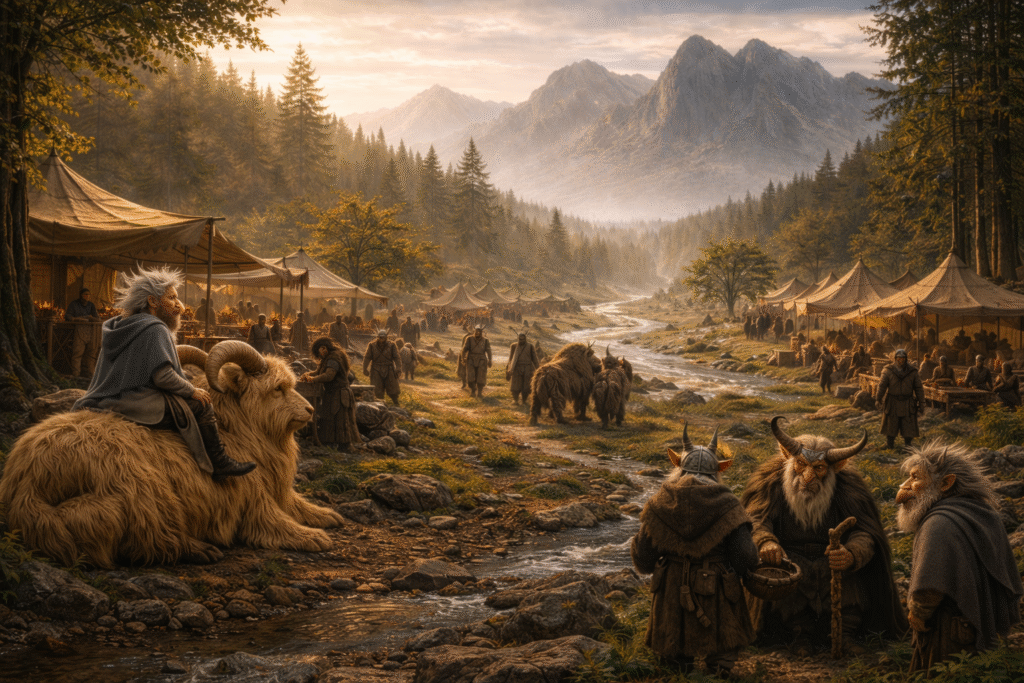
Their villages blossomed into places of trade and shared craft. Art, music, and storytelling wove between the tribes as freely as the rivers that linked their lands. Harmony became tradition; balance became sacred. Seasons turned, generations passed, and for centuries the realm knew only peace.
Until the rumors began.
The Threat takes shape
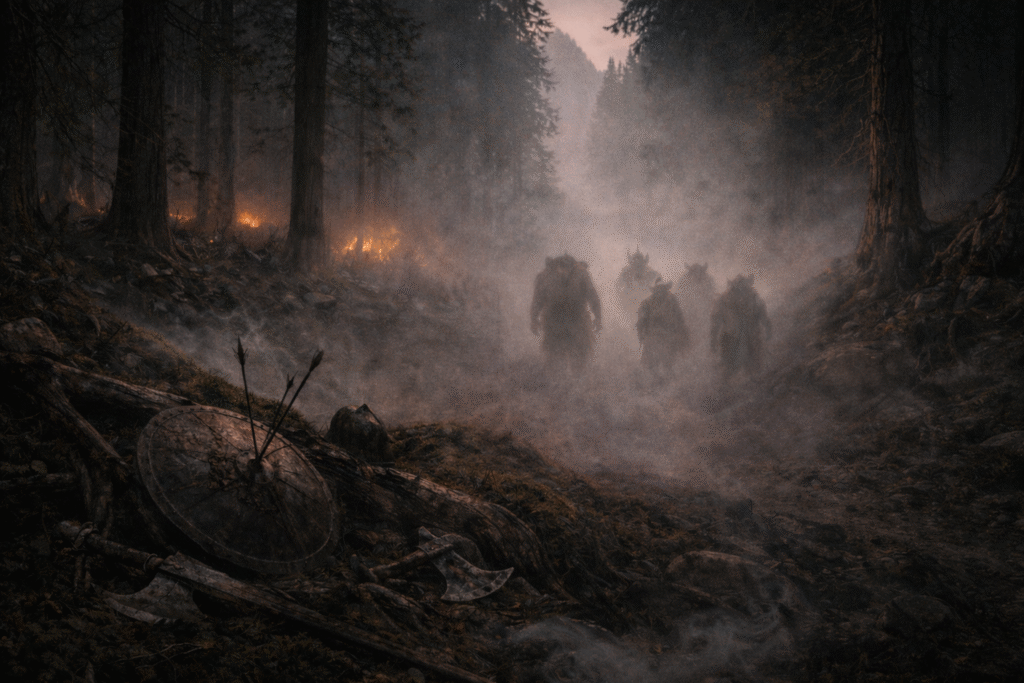
It started as whispers—travelers vanishing near the Eryndal passes, caravans torn apart, bodies found with hideous wounds. Villagers in Dreomere spoke of hulking shadows moving through the mists. Hunters in Orravel glimpsed silhouettes crouched at the mouth of ravines.
Before long the danger grew too great to ignore. Attacks became frequent rather than isolated; caravans vanished on routes that had been safe for generations, and travelers stopped moving between the tribes. Trade faltered, messages went undelivered, and entire settlements grew uneasy as the creatures began appearing more and more. It was clear that the threat was growing—and that it was organized.
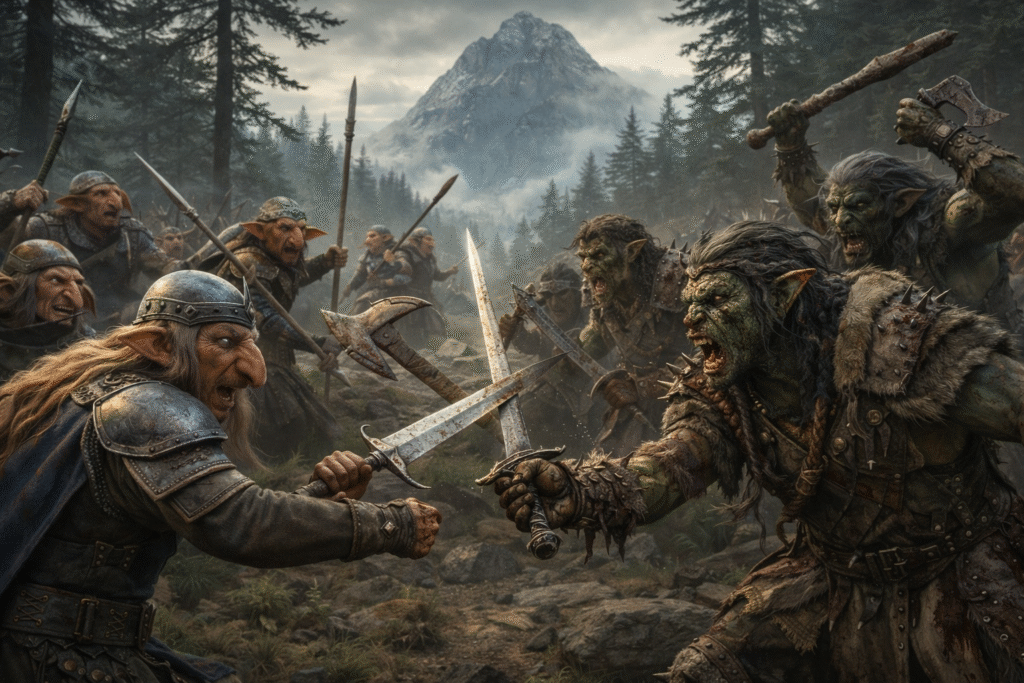
In the months that followed the first sightings, the stories only grew darker. What began as scattered rumors hardened into grim reports carried from tribe to tribe. The tribes gathered in urgency and sent out several groups of heavily armed warriors and seasoned trackers. It did not take long before one of these patrols found the threat they were searching for. On the high ridges where Thalorien’s deep forests gave way to the stone slopes of the Eryndal Heights, the Vhalandir engaged the creatures in several brutal clashes. There, they finally saw them clearly. The beings were tall and powerfully built, with broad, square heads and heavy features twisted far from anything familiar. Their bodies bore the marks of long centuries spent beneath stone and shadow. Crude but menacing armor clung to them — layered hides, metal plates, spikes, and worked bone shaped for intimidation as much as protection. Each warrior carried heavy weapons: axes, clubs, and jagged blades meant to crush rather than cut. They moved with grim coordination, not like mindless beasts, but like warriors shaped by long and disciplined violence. The fighting was vicious, yet through unity and coordinated strength the patrols eventually managed to drive the attackers back into the mountains.
The Vhalandir kept their distance but did not let them disappear. They followed the trail higher and higher, tracking deep footprints in gravel and snow, broken branches, and claw marks carved into the stone. The path twisted along narrow ledges until, half veiled in fog, they came upon a dark opening in the cliff face—an entrance no map recorded and no Vhalandir had ever explored. Thus, without planning to, they discovered what lay beneath Eryndal: a hidden world of echoing stone and darkness, the place that would one day be known as Veythar.
They entered cautiously. The tunnels inside descended sharply, spiraling in long sweeps of cold stone. Darkness clung to the walls, relieved only by patches of faintly glowing fungi casting eerie blue and green light across the rock. Every sound behaved strangely; footsteps echoed too far, whispers returned warped, and something seemed to flicker at the very edge of sight—quick movements, shifting silhouettes, the quiet scrape of something pulling back into cracks. The deeper they went, the more oppressive the air became, as though the tunnels themselves were aware of their presence and listening.
They did not get far. The creatures had realized they were being followed, and the moment the Vhalandir stepped into the first wide cavern, the ambush fell upon them. The creatures surged out of the shadows — and behind them came reinforcements, led by a towering figure draped in a long, tattered robe and carrying a decorated staff hung with charms of bone, feather, and skull.
A shaman.
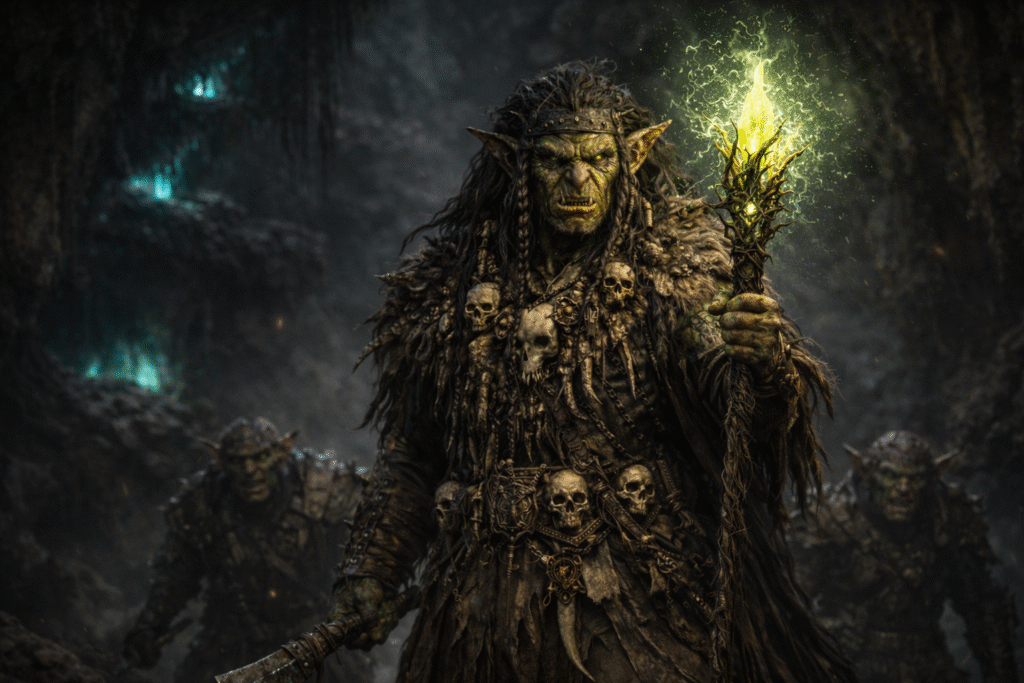
The attack was devastating. Not only were they greatly outnumbered by the vicious warriors, they were also incredibly outmatched by the deadly magic spells of the shaman. Even the strongest Vhalandir saw instantly that survival was impossible. In the chaos, a single desperate decision was made: someone had to escape and carry word back to the tribes. The oldest and most battle-worn warriors stepped forward without hesitation, forming a living shield as they shouted for the two youngest trackers to run. Those two fled back up the tunnel, stumbling through disorienting echoes and shifting shadows, driven by the sounds of their companions buying them time with their lives.
They burst out of the mountains half-frozen and shaking, but alive. By the time they reached the nearest Vhalandir settlement, they could barely speak yet their warning was clear enough. A second party was sent to retrieve a body, proof of what they had faced, or at least to bring home their fallen kin. But when they reached the site of the first battle at the foot of the mountain, all traces of the creatures were gone. There were no footprints, no discarded weapons, barely any sign of battle—only the bodies of the Vhalandir who had fallen, untouched except by the silence of the forest. The dead were carried home, and a long period of mourning swept through the tribes. Some hoped that the creatures had been frightened enough to disappear forever. Others feared that this quiet was only the beginning.
The Vhalandir began at once to train a new generation of warriors, drilling them day and night in preparation for whatever might come. Couriers were sent to the other peoples of Vhalandar—warnings carried across forests, wetlands, and plains—urging them to stay vigilant, to report sightings, and to stand ready should the creatures return in force.
And return they did.
A Breakthrough at Last
At first, only shadows at the edge of sight: lone figures slipping across the borders of Eryndal, moving with deliberate caution, never attacking, never lingering. Scouts—clearly searching for settlements. Soon they were spotted not only near the mountain passes, but deep within the lands surrounding them.
Most unsettling of all, their attention seemed to drift again and again toward the largest Vhalandir settlement: that of the Thaeryx tribe in Thalorien Forest. Years passed in uneasy quiet. No great attacks came, yet the number of slain travelers and razed caravans slowly rose. Something in the air had changed. Eryndal felt… tense, as though the mountains themselves were holding their breath, waiting for a storm they already sensed.
Still, the Vhalandir did not sit idle. Their young warriors grew skilled, patrolling daily along the borders and foothills. Clashes with the creatures became almost routine, yet every fight felt like a test—probing, measuring, never committing. No matter how hard the warriors tried, they never managed to bring down even a single creature. Each enemy slipped away, wounded perhaps, but alive.
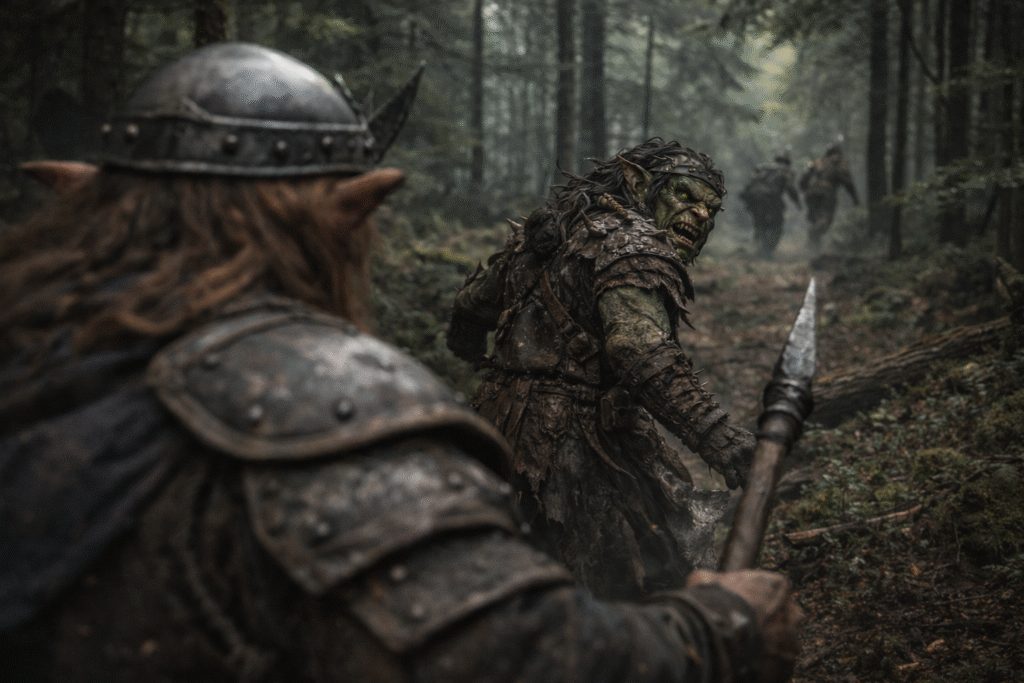
The scholars grew desperate for answers. They longed to study one of the creatures, even if it was a corpse, to understand these beings—how they fought, how they thought, what weaknesses they possessed—but without a body, all they had were stories and scattered observations. Across every tribe and settlement, knowledge was shared and compiled, yet one truth remained constant: whatever these creatures were, they were unlike anything ever recorded in the histories of Vhalandar.
Then, one day, they finally had a stroke of luck.
A Thaeryx patrol was scouting near the border of Thalorien and Dreomere—an area notoriously treacherous, riddled with deep bogs, hidden sinkholes, and the many dangerous creatures that haunted the dark wetlands. Normally, patrols kept well clear of these places. But the Fauknir who lived there, a humble people of farmers and laborers, had reported several sightings of the creatures in only a few days. They were vulnerable, and the Thaeryx would not abandon them.
After many hours pushing through mud, thickets, and the sickly mist that clung to Dreomere’s lower woods, the patrol stumbled upon a group of travelers under attack. The fight was brief and brutal, but the Vhalandir managed to drive the creatures off; the survivors fled into the deeper forest, shadows slipping between the trees.
The young patrol leader—a bold, fiercely determined man called Rylox, whose ambition was matched only by his anger at the mounting deaths—had had enough. He rallied his warriors and ordered the chase.
The damp ground worked in their favor. Footprints and broken reeds marked a clear trail, winding deeper into the wetlands and over the firmer rises beyond. After what felt like hours of slogging through foul water and dense undergrowth, the scent of smoke drifted through the trees. A camp.
The leader signaled for silence and sent his most skilled scout ahead. The scout climbed a tall pine at the camp’s edge and returned with his observations: the creatures were resting in a small clearing, oblivious of the fact that they were followed. And among them was someone different—someone important. Where the others wore crude armor and carried rough-forged blades, this figure stood draped in a long, tattered robe, gripping a tall staff heavy with macabre ornaments such as skulls, bones, feathers and strange charms. Everything about him marked rank. Command. And magic.
Rylox knew this was their chance. They waited patiently for the right moment, allowing the camp to settle. Only two guards kept a lazy semblance of watch, speaking more to each other than paying attention to the dark around them.
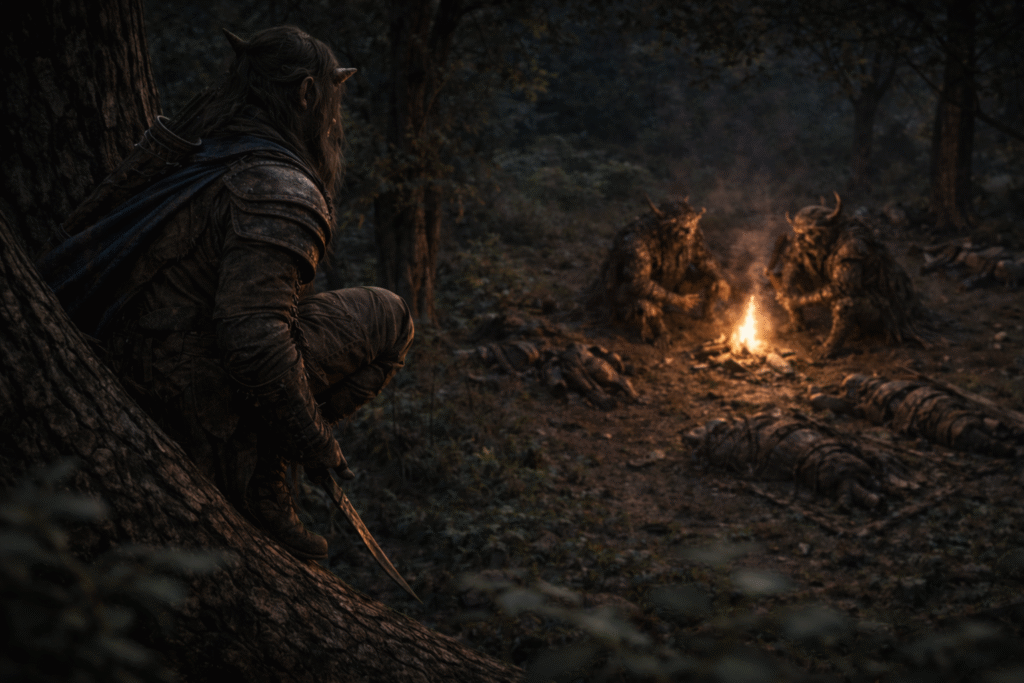
It was then that the Vhalandir struck. The scout’s arrow flew first—true, silent, and fatal. The robed figure crumpled without a sound, dying even before he had a chance to wake. In the heartbeat that followed, the patrol surged from the trees, overwhelming the camp before the creatures fully woke. The battle was swift but vicious. When it ended, only one of the creatures still breathed. They bound the survivor tightly to a makeshift litter, gagging him when he refused to stop snarling, and gathered every scrap of the fallen leader’s belongings: scrolls, crude tomes, pouches of glittering herbs, bone talismans, and items none of them could immediately name. The dead body was wrapped securely for transport.
The Truth beneath the Flesh
With help from the Fauknir settlement—who lent them a wagon and shelter for the night—the patrol reached the Thaeryx two days later, exhausted but triumphant. The scholars began examining the body at once. Its flesh was already starting to decay, but the strange artifacts, the talismans, and the faint traces of magic woven into the garments gave them much to study.
Interrogating the living creature proved far more difficult. He was grievously wounded, his life fading even as they tried to keep him stable, and he had no intention of cooperating. It was the young, ambitious patrol leader Rylox who ultimately forced progress, using methods far less gentle than those the scholars might have preferred.
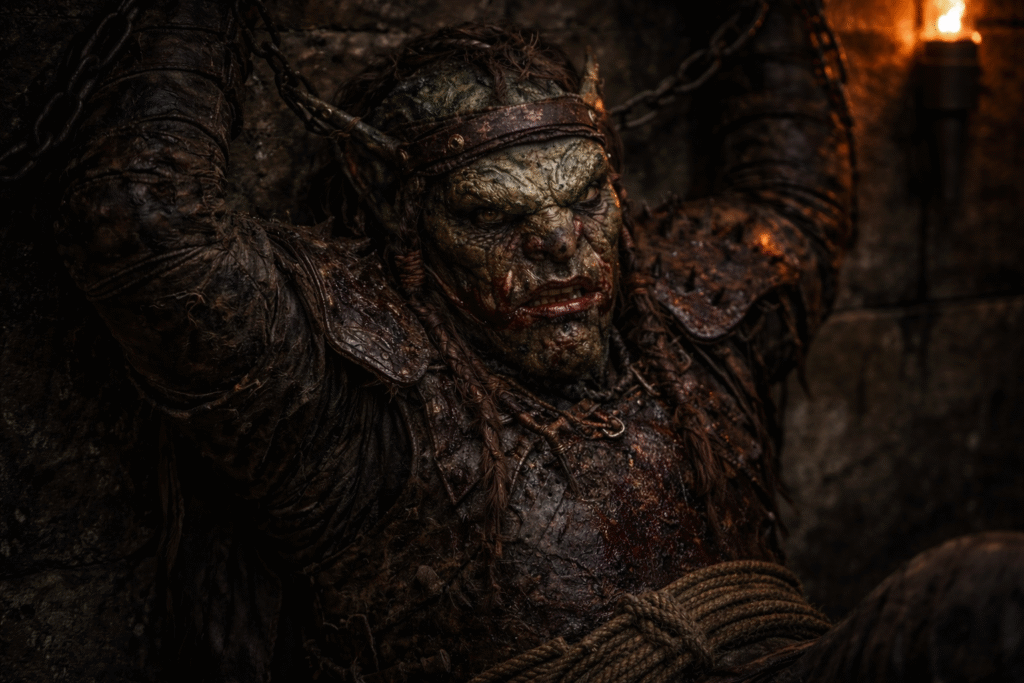
The creature finally spoke. Not clearly, not willingly—but enough. Beneath the guttural growls and twisted pronunciations was something horribly familiar. A language warped by centuries, but unmistakable in its roots. Its speech resembled Vhalandic. Barely intelligible, mutated beyond recognition in many places, but recognizably descended from their own tongue. They did not learn much—only threats, curses, and half-understood fragments—but they learned one thing with devastating clarity: the creatures called themselves the Drovak.
The scholars soon confirmed what the patrol had suspected: the robed creature was indeed a magic-user — a priest or shaman of sorts — and the charms, bones, feathers, and carved tokens found among his belongings hinted at the worship of one or more higher powers. Whatever those powers were, they had granted the creature abilities unlike anything recorded in Vhalandir lore.
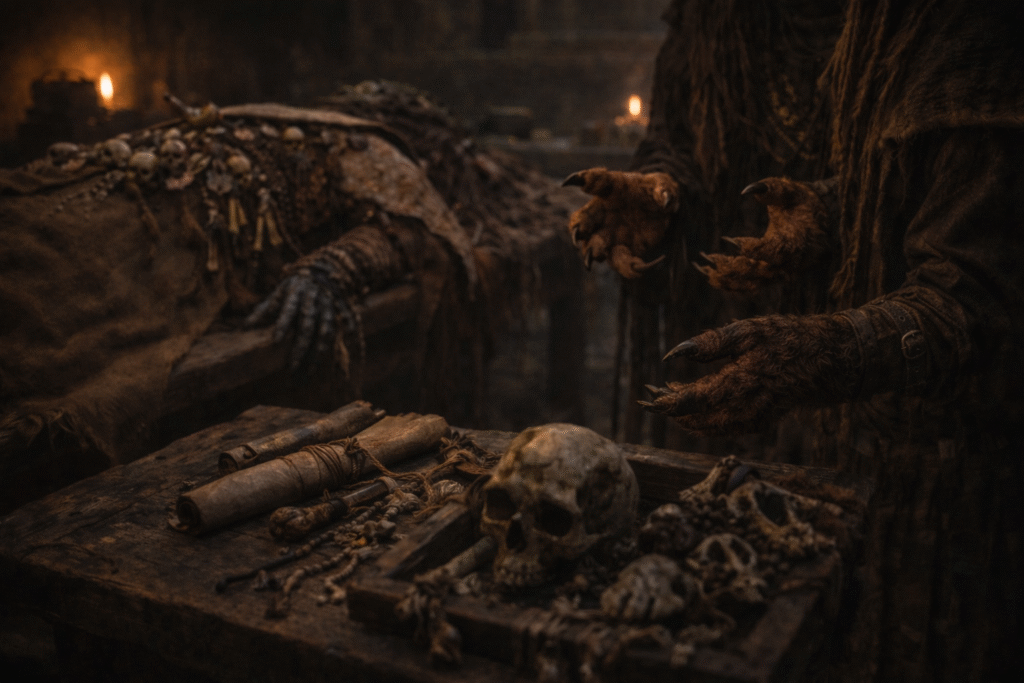
But as the scholars dug deeper — studying the decaying body of the shaman, the strange scrolls, the crude symbols scrawled onto scraps of hide — they uncovered something far more horrifying. Beneath the hardened flesh, beneath the twisted bone structure and the layers of corruption, there were unmistakable traces of familiar anatomy. Ancient scars and bone formations that matched old Vhalandir records. A cadence in the guttural language of the captive that mirrored their own.
Piece by piece, an unbearable truth emerged: the Drovak were Vhalandir — or rather, what centuries of forbidden magic and devotion to dark forces had twisted them into. Not monsters born, but kin lost to corruption so profound it had reshaped their bodies, minds, and souls.
The Breaking of the Pact
In the days that followed this revelation, the world itself seemed to recoil. The ground shuddered beneath Thalorien’s roots. The peaks of Eryndal belched smoke and fire. Heavy clouds rolled in from the north, swallowing the sun in an unnatural gloom. Animals fled the forests. Rivers trembled with strange currents. Something was coming.
Recognizing the gravity of the threat, messengers rode through every corner of Vhalandar. Within days, Vhalandir from distant tribes and representatives of other races started gathering in Thalorien for the largest summit in living memory. A High Council was formed from scholars, elders, and mystics to pore through ancient scrolls and forgotten myths, searching desperately for anything that might counter what the Drovak had become.
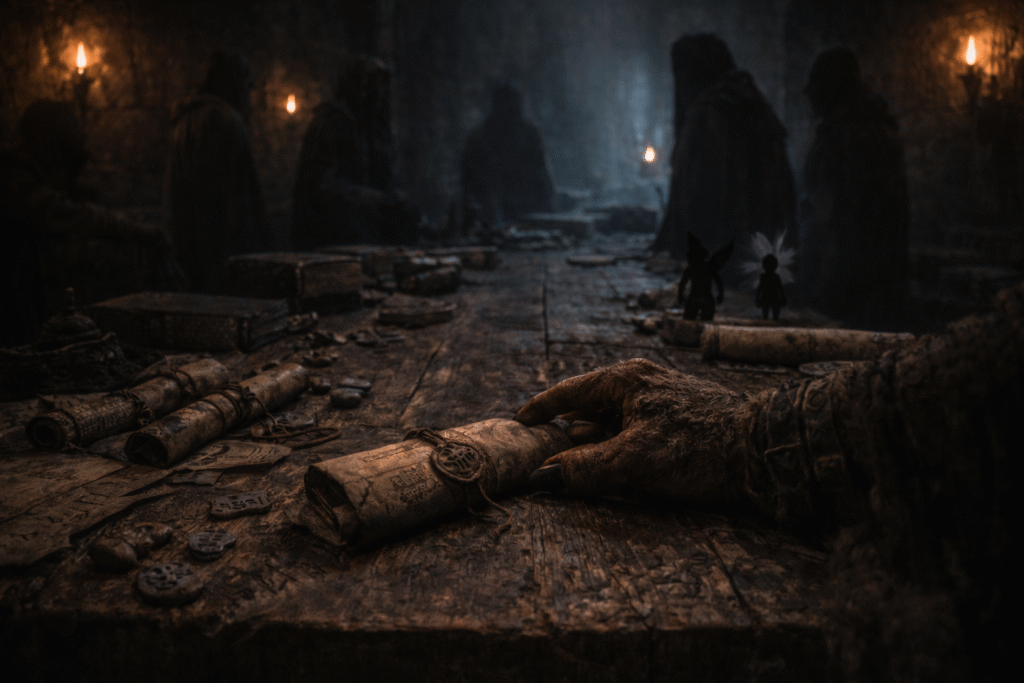
At last, after long debate, the Vhalandir made a decision that none had taken lightly:
the sacred pact forbidding magic — upheld for centuries — would be broken once, and once only.
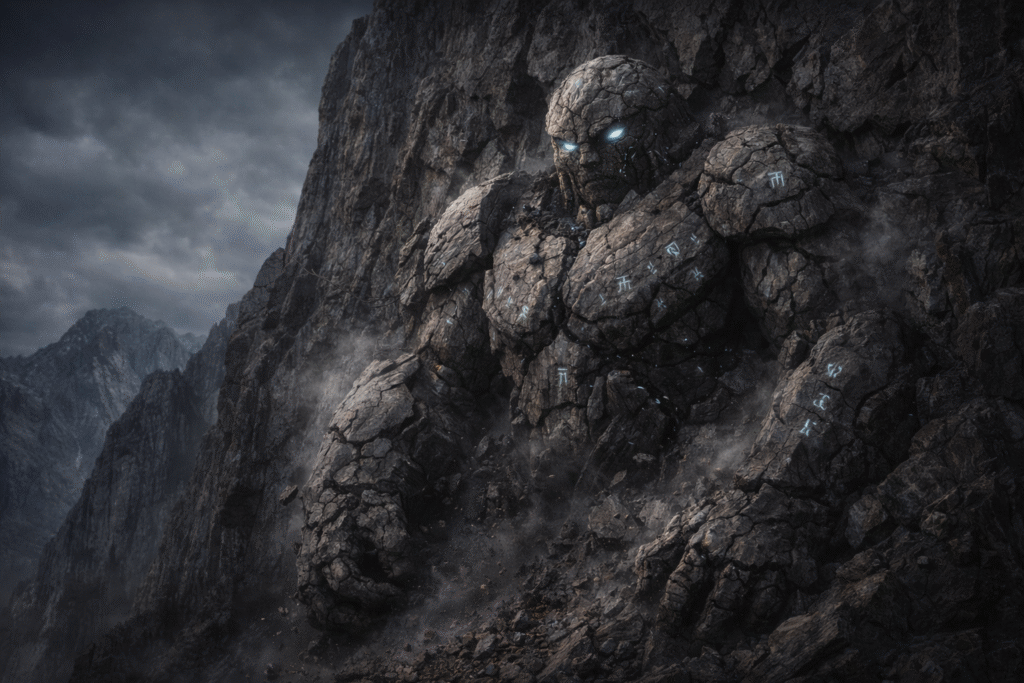
For there were beings older than any tribe, older than written memory, whose power slumbered beneath moss and mountain stone: the Forest Guardians and the Stone Golems. The allied forces needed any help that they could get.
Weeks of rituals followed. Long nights of chanting, preparation, and rites so secretive that most of their details were hidden away again the moment they were completed. And then, at last, the earth answered. The Forest Guardians stirred from their millennia-long sleep, their eyes glowing like deep embers beneath bark and leaf. The Stone Golems rose from the cliffs and caverns of the mountains, shedding centuries of granite dust as they awakened once more. And their awakening came not a moment too soon.
What followed would be remembered as the darkest night in the history of Vhalandar — a night later known as the Night of the Devouring Flame.
The Silence before the Flame
For weeks the mountains had been grumbling in the distance, a restless growl beneath the earth, and in the final days that unease had only grown stronger. But when night finally fell, the world shifted in a way no one expected: every sound vanished at once. No wind stirring the leaves, no calls of beast or bird, not even the familiar deep rumble from the mountains. The silence was so sudden, so absolute, that it seemed to press against the ears like a physical force.
The Vhalandir and their allies gathered at the edge of the forest, staring toward Eryndal with a mix of fear and fragile hope. Some even dared to whisper that perhaps the threat had passed, that whatever storm had been building within the mountains had simply… dissipated.
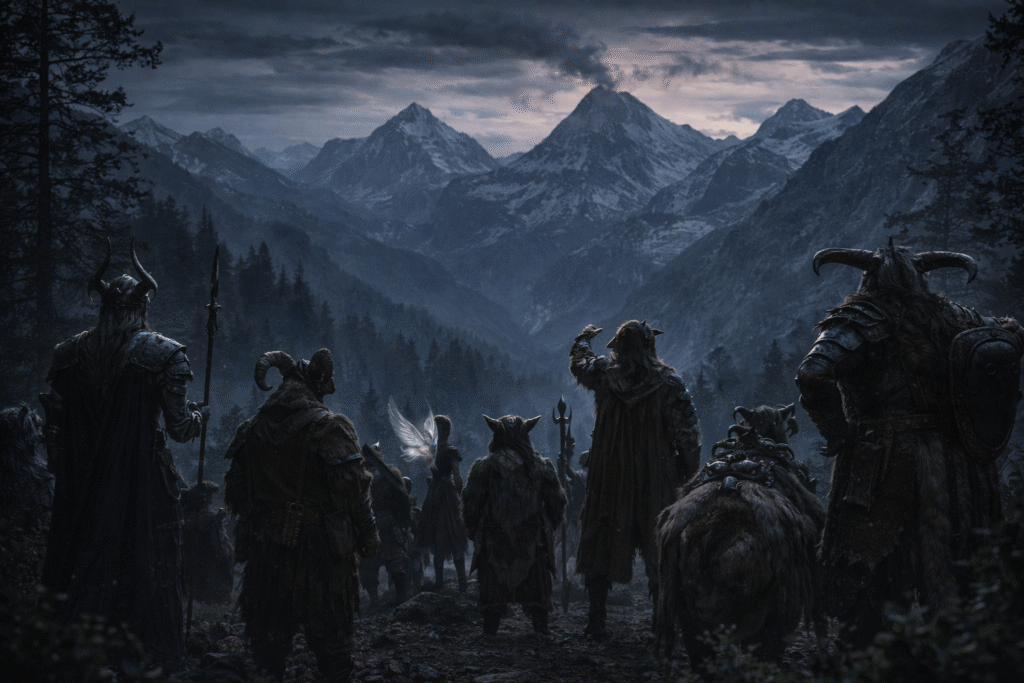
Then the earth trembled. A faint vibration at first — the kind one could almost mistake for imagination — but it grew quickly, rippling through the ground until the soil itself seemed to writhe. Within moments the tremor became a full shudder, strong enough that even seasoned warriors struggled to stay upright. And before anyone could regain their balance, Eryndal erupted.
One of its tallest peaks split apart in a blinding burst of fire and molten stone. A plume of flame shot into the sky, turning night into a violent, pulsing dawn. The blast that followed struck with the force of a storm, knocking people from their feet and tearing saplings from the ground. Farther up the slopes, avalanches crashed down in roaring white torrents, chased by billowing clouds of ash and embers.
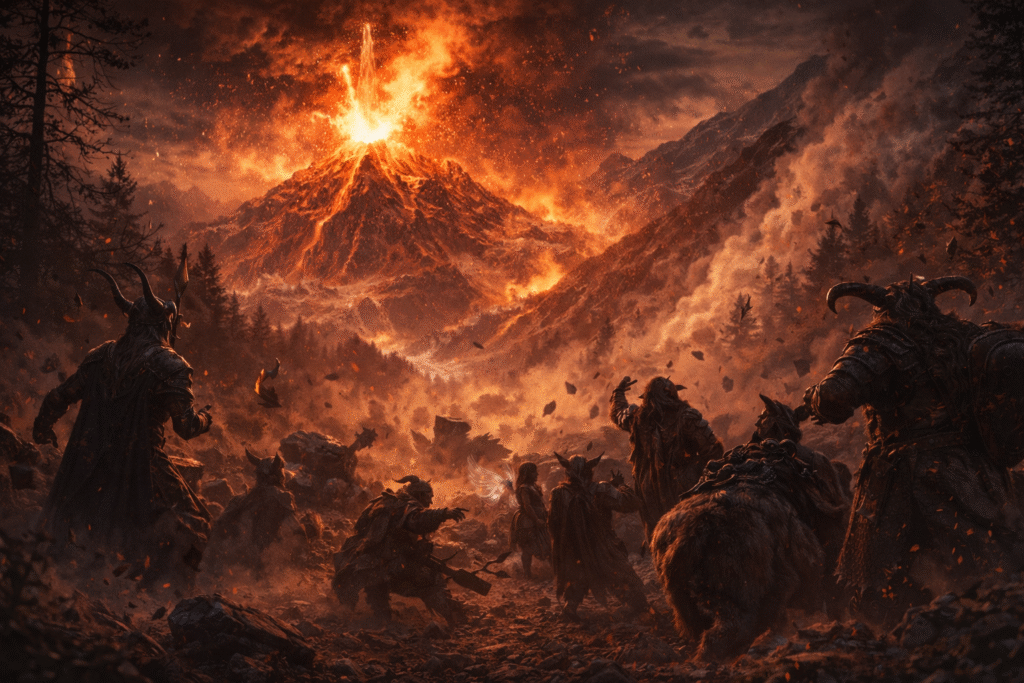
As the stunned survivors scrambled to their knees, still struggling to comprehend the devastation unfolding before them, a new sound rose from the mountains — deep, rhythmic, unmistakable: wardrums.
The Drovak were coming.
The Flood of Fire and Shadow
The Drovak surged down from the burning slopes not as a lone army, but as a tide of nightmare — disciplined ranks of Drovak warriors interwoven with horrors torn from shadow, ash, and living flame. Among them moved their shamans, few in number but impossible to miss, cloaked in a sickly, flickering glow, their voices rising in harsh, grating chants that made the very air tremble. With every sweep of their decorated staves, they unleashed spells that tore through shield-lines and cracked the earth beneath the defenders’ feet.
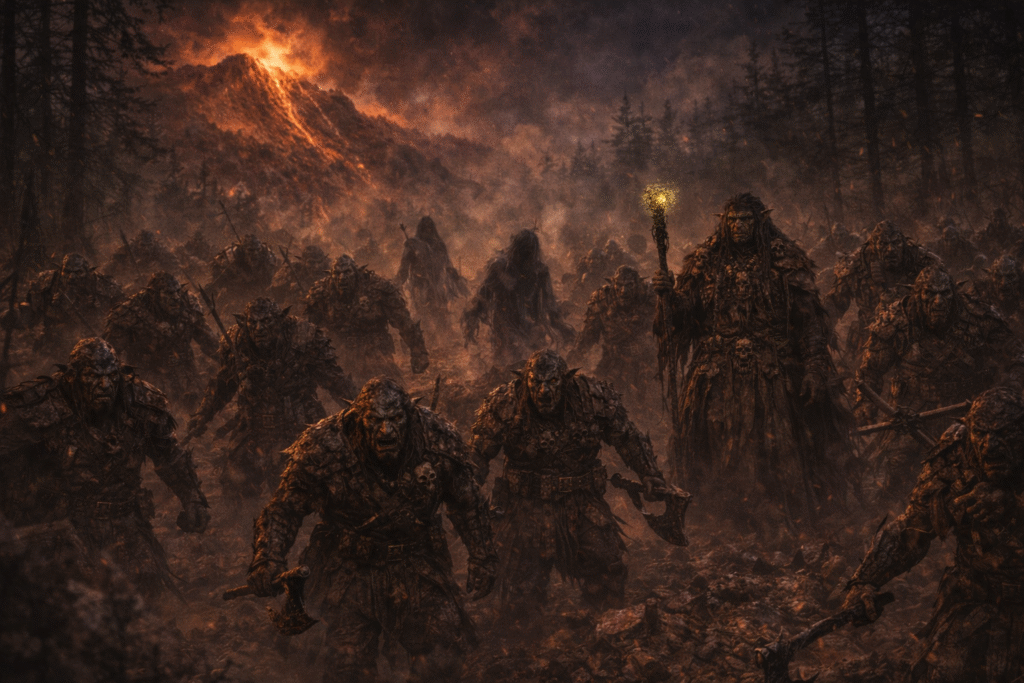
Worse still, death refused to stay dead. Where a Drovak warrior or one of their monstrous abominations fell, the shamans dragged their spirits back with magic foul enough to sour the wind. Bodies convulsed, bones jerked, and lifeless eyes ignited with ember-light as the fallen rose once more to fight. Limbs reknit in unnatural ways, mouths opened in soundless shrieks, and soon the field was choked with undead things that should never have walked again.
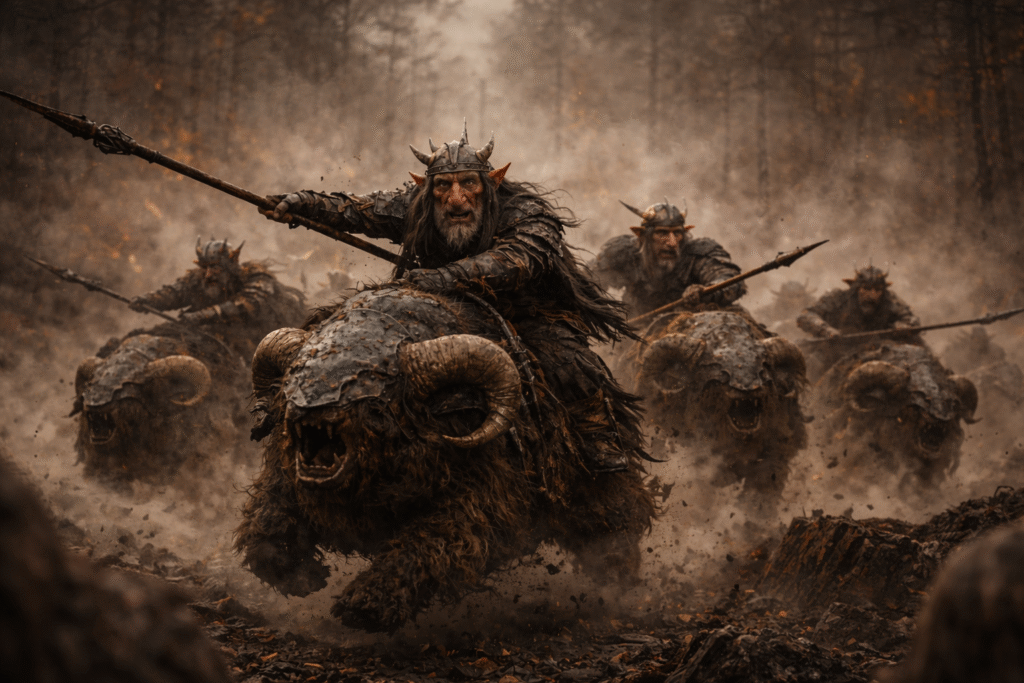
And yet the defenders of Vhalandar did not break. Clad in layered armor and riding atop heavily plated Fyr, they hurled themselves into the oncoming dark with a courage that bordered on defiance. The thunder of Fyr hooves rolled across the valley as if the mountains themselves had joined the charge. Spears struck true, shields locked in shimmering walls, and the great beasts slammed through Drovak ranks with raw, unstoppable force.
But the Vhalandir did not stand alone.
Among them moved the Forest Guardians and the ancient Stone Golems, awakened from their millennia of slumber. Towering shapes of bark, root, and living stone tore through shadow-creatures and summoned horrors with devastating sweeps of their limbs. Flames guttered and died beneath their strikes; undead bodies shattered into dust under their crushing weight. Their presence alone turned the battlefield into a clash of primordial powers — corruption against creation, ruin against resilience.
From the shadows between the trees came the Nissri, unseen until the very moment mischief turned deadly. They slipped beneath Fyr bellies and between charging legs, their tiny hands armed with sharpened stones, bone slivers, and nettles wrapped like darts. With wicked precision they struck at soft places — a Drovak’s exposed eye, the tendon behind a knee, the thin strap of a weapon belt. Their laughter, sharp and feral, cut through the roar of battle as they turned chaos into opportunity.
Above them drifted the Aeluri, their wings shimmering like torn moonlight in the smoke-filled sky. Bound by no Vhalandir oath against magic, they wielded their small spells with fierce, focused grace. Roots surged from the earth to snare ankles; briars whipped up to block a blow meant for a fallen fighter; a flash of soft white light restored a breath or steadied a failing heartbeat. Their power was never overwhelming, but perfectly placed — the kind of magic that turned certain death into a single moment more to stand and fight.
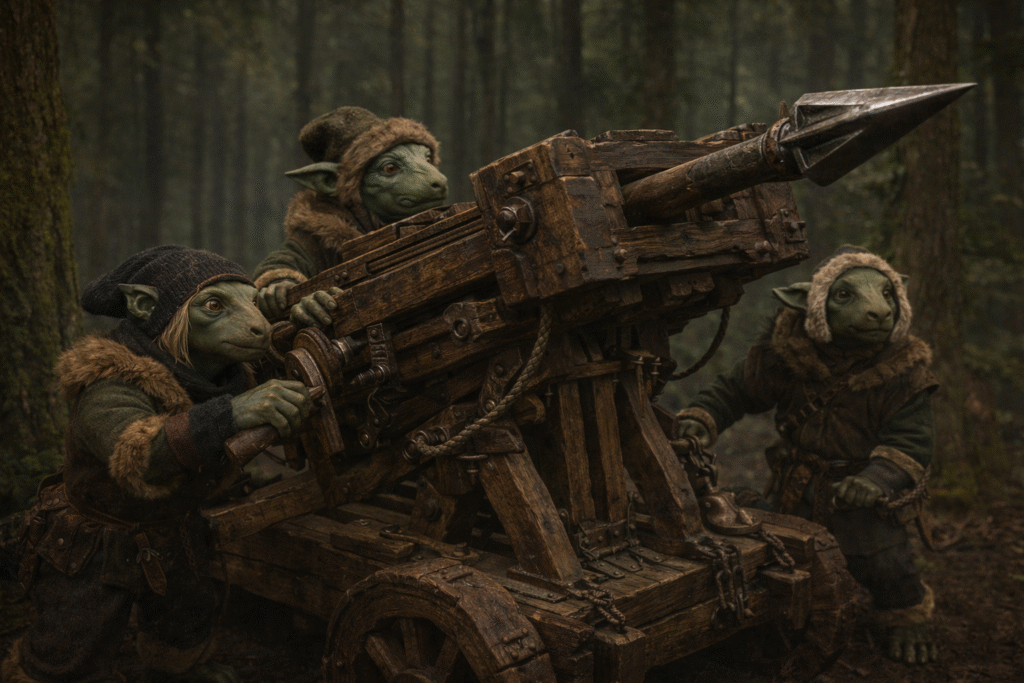
Even the Fauknir, far from warriors, found their place in the storm. Their hands, trained for timber and stone, had built great engines of war at the Vhalandir’s call — ballistae the size of oaks, their arms pulled taut by drums of braided marsh-cord. Now these machines hurled iron-tipped bolts across the battlefield, smashing through summoned beasts and slamming into the ranks of Drovak monstrosities with bone-shattering force. Fires guttered out where their missiles struck; even the towering undead faltered beneath their weight.
And beyond them still fought others — races whose names have long since faded from record, whose appearances live now only in the half-remembered stories of survivors. Some were said to move like shadows with blades of stone; others burned with inner light, their bodies glowing as they collided with the foul creatures of the Drovak horde. And with every tribe, beast, spirit, and forgotten kin standing shoulder to shoulder, it seemed for a moment that courage itself might hold the line. But bravery alone could not save them.
For all their unity, for all the courage of the Vhalandir and their allies, they were no match for what had come crawling out of Eryndal’s bleeding mountains. The Drovak fought with the fury of a people twisted beyond mercy. Their shamans — few, guarded, and terrifyingly potent — wielded fire and shadow with terrible precision. Their warriors moved with a strength no living flesh should hold — the strength of centuries spent festering beneath the earth, honing hatred into a weapon sharper than any blade.
Again and again the line of the forces of good buckled. Fyr in heavy plate were thrown aside like straw dolls. The Nissri and Aeluri, quick and cunning, faltered beneath the onslaught of spells meant to unmake the mind. Stone Golems cracked under curses that rotted stone into dust. Forest Guardians — ancient as the trees themselves — staggered beneath waves of unnatural flame that refused to die.
And slowly, horribly, the line began to give way.
For every Drovak that fell, two more seemed to rise. Their undead kept crawling from the shadow of their shamans. Their fire-born beasts surged through the smoke. The air tasted of iron and ash; the ground shook with every chant of their war-priests. Hope began to slip. Even the bravest among the Vhalandir felt it — a cold certainty that this was how the world ended, swallowed by the very evil their ancestors once unleashed.
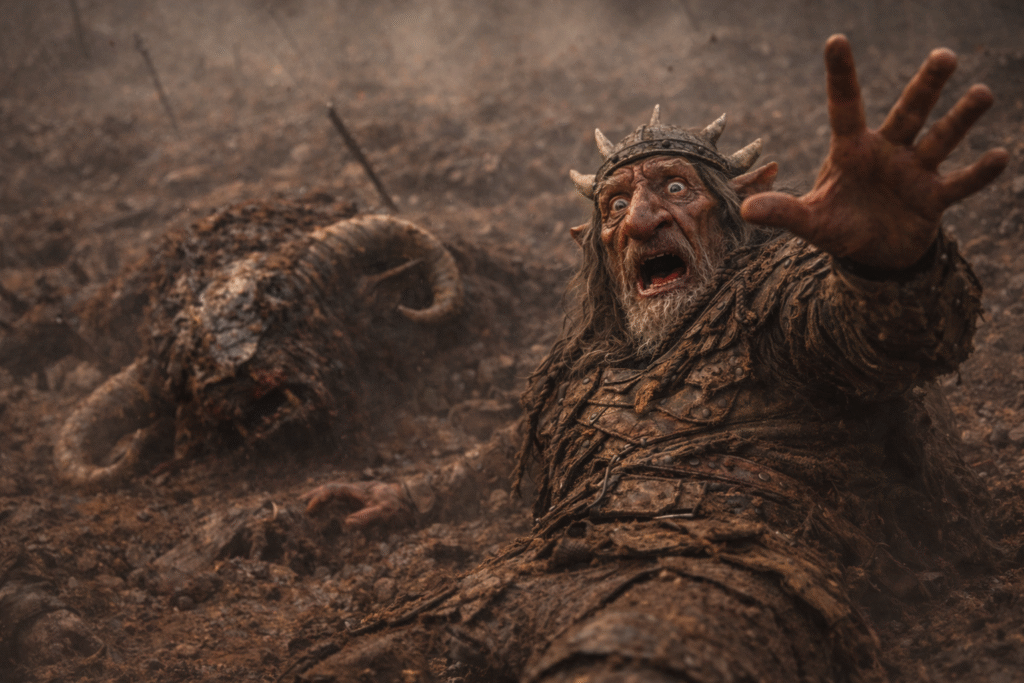
It was in that moment, when the balance tipped fully toward annihilation, that Vhalandar itself stirred.
The Balance Shifts
The Forest Guardians felt it first. Their wooden bodies surged with new strength; sap roared like blood through their limbs. Their moss and bark hardened into living armor. Their eyes, once soft with ages of peace, burned with the raw will of the land. The Stone Golems awoke fully. Their bodies cracked open with molten light, runes blazing like dawn through their granite hides. They moved faster — impossibly faster — shrugging off the Drovak’s spells as though they were no more than sparks.
And then the sky broke open. A storm descended — rain and thunder bound together with something far older and far stranger. Veil-light fell in shimmering currents, striking only corruption. Where it touched Drovak spells, the magic hissed and died. Where it fell upon their undead, sinew unraveled and bone crumbled. Where it brushed their fire-creatures, their flames guttered like dying candles. High in the mountains, the rivers of lava that had begun their descent — poised to swallow the battlefield and Thalorien beneath — shuddered, cooled, and fell still, their fury extinguished by the same unseen force. Rain lashed the battlefield, soaking earth and armor alike — yet the Veil-light moved with impossible intent, bending through the downpour as though guided by an unseen will.
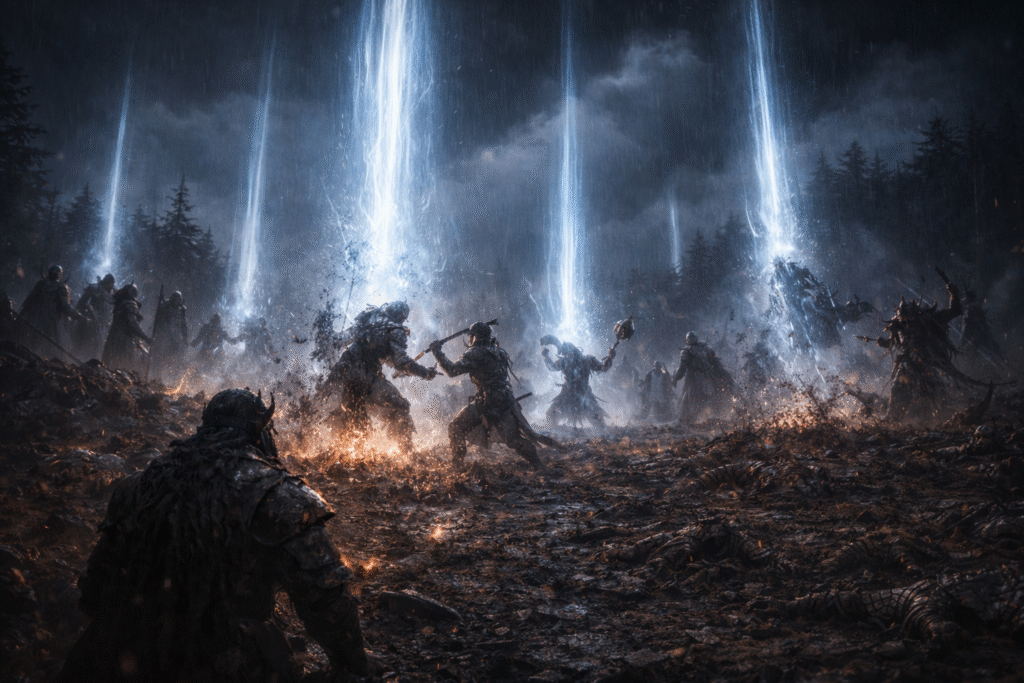
And in that moment of drowning flame, something else happened — something the Drovak had not foreseen. The creatures they had bound — the shadow-things, the fire-spirits, the warped horrors dragged from caverns and pits — felt the shift. They felt the Drovak weaken and they turned. The balance had swung. Corruption faltered and the enslaved struck back. Shadow beasts tore into Drovak ranks, fire spirits lashed out at the very shamans who had summoned them and undead constructs collapsed into heaps of rot as the magic sustaining them shattered. The battlefield dissolved into chaos — not the chaos of battle, but of rebellion, a fracture born of broken control.
The Vhalandir saw the opening. Guardians surged forward, roots ripping through armor. Golems charged, each step cracking the earth. Fyr roared beneath their riders, their horns lowered like lances of bone and bronze. And for the first time that night, the Drovak faltered. What had been an unstoppable advance began to buckle. The shamans, suddenly battered from all sides — by rebel shadow-creatures, by fire-spirits turning on their masters, and by the renewed fury of the Vhalandir — struggled to keep control of their summoned horrors. Their chants broke. Their wards flickered. Warriors who had charged with the certainty of victory now found themselves pressed back, step by step, into the choking haze. The battlefield shifted. Slowly. Relentlessly. And the Drovak — so certain of annihilating everything that lived — began to retreat. At first it was a stagger. Then a steady push. Then a desperate fallback as their lines collapsed under the combined wrath of the living and the freed.
But even in defeat, the Drovak were not without cunning. Remembering the desperate stand the Vhalandir had made two centuries earlier — the sacrifice that had allowed two young scouts to escape and warn their people — they now mirrored that very act with ruthless precision. As the tide turned fully against them, a signal rose among the ranks — a guttural roar, echoed by a dozen voices, then a hundred. The Drovak leadership had made their choice. A vast contingent of warriors broke from the main force, hurling themselves into the path of the charging Vhalandir and their allies. It was not a rout. It was a sacrifice — brutal, deliberate, and chilling in its discipline. They held nothing back, fighting with a frenzy that bordered on suicidal, their only purpose to buy time. Behind them, half-hidden by the smoke and the rising mist, a cluster of robed figures slipped away — shamans, war-priests, commanders… the spine of the Drovak.
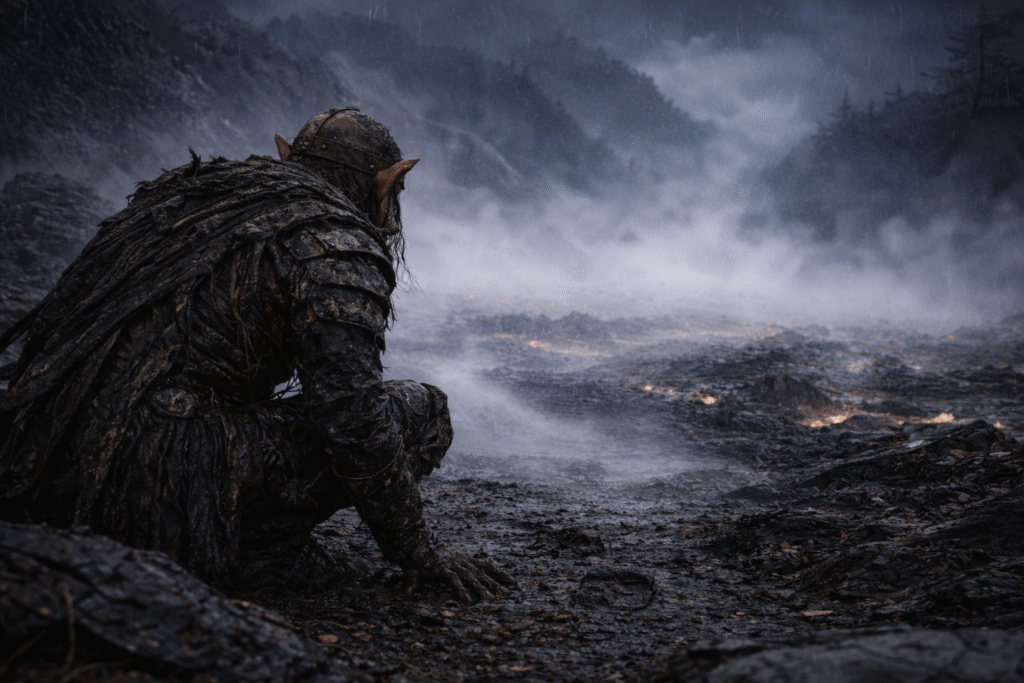
Rylox saw it first. He shouted for pursuit, and the Vhalandir gave chase, driving hard toward the shadowed foothills. But visibility had collapsed into a nightmare. The rain-steam hung thick as wool. The ground churned with mud and ash. Every rock and branch looked like a figure fading into another. The deeper they ran, the worse it became. The dying lava had cooled into sheets of hissing stone, releasing waves of white vapor that rolled down the slopes like spectral fog. Shapes moved within it — or seemed to. Footsteps vanished. Tracks dissolved. Sound warped and echoed until directions meant nothing at all. One by one, the pursuers slowed. The Drovak leaders were gone — swallowed by the mountains. Only silence remained, broken by the distant crack of cooling stone and the ragged breathing of those who had chased shadows into the dark.
When the Ashes Settled
When the last echoes of battle finally faded, Vhalandar stood in ruin. The Drovak were defeated — scattered, broken, driven back into the shadows — yet victory tasted like ash. What remained was a vast and terrible battlefield: fallen Vhalandir, Drovak corpses twisted by corruption, the shattered remnants of creatures no scholar had names for. It took weeks to clear the dead, to burn or bury what could not be carried, to mend the wounded and reclaim the torn edges of Thalorien’s forest. And even when the work was done, it took many months before the land breathed easily again, before the trees stopped shuddering at every breeze and the soil ceased to tremble with memory.
The ancient Forest Guardians and Stone Golems patrolled the borders long after the fighting ceased, making certain no remnants lingered in the shadows. When the forest finally calmed — when the rivers flowed clean again and the sky no longer carried the scent of ash — the Stone Golems returned to their mountains. One by one they pressed their massive forms against the sheer faces of Eryndal until stone embraced stone, and the runes upon their bodies dimmed into silence. They slept once more, waiting for a time when the world might need them again.
Most Forest Guardians followed soon after, folding back into bark and branch, returning to the long slumber from which they had been roused. But a few — the youngest of their kind — remained awake. They found the waking world too full of wonder to abandon, and so they chose to walk it for a time. These few would be the watchers, ready to summon their kin should darkness ever rise again.
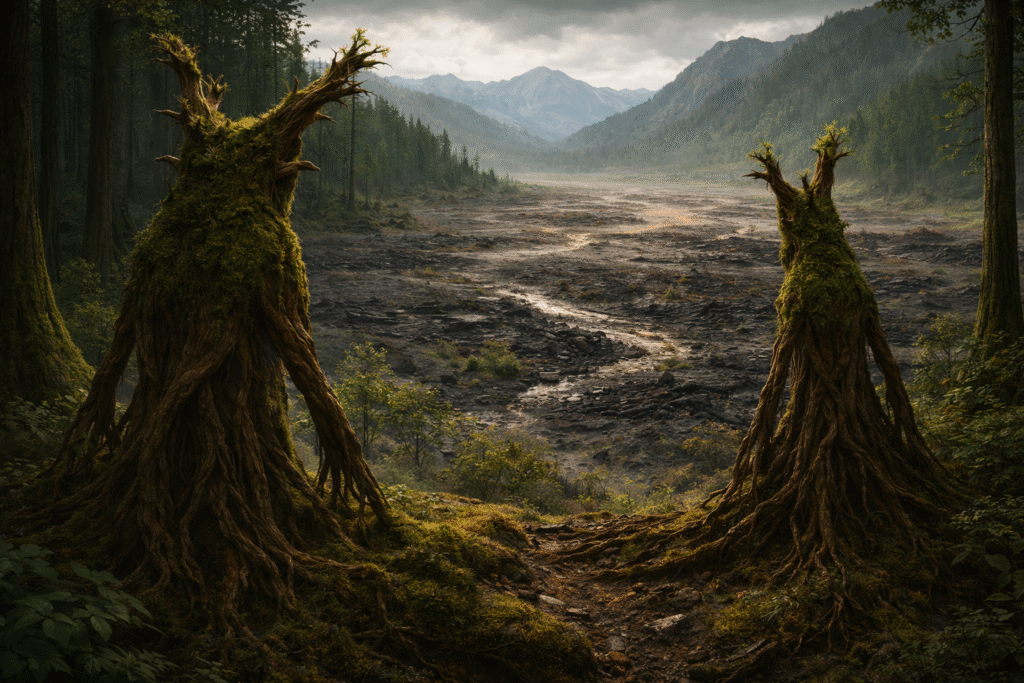
With the Guardians standing vigil, the Vhalandir laid down the last threads of magic they had dared to use. The pact of non-magic — broken only once in all of history — was restored. The rituals that woke the ancient beings were sealed away, their secrets kept only by the High Council, passed from one generation to the next in silence and caution.
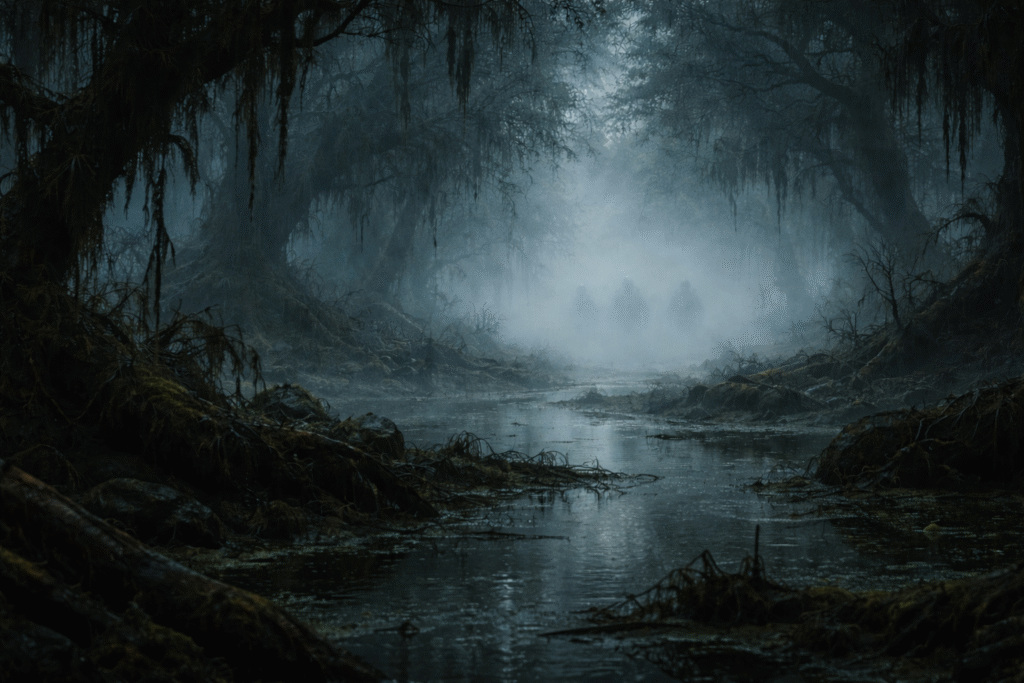
Many believe small splinter-groups of Drovak still linger in the wetlands of Dreomere, hiding among its dark water-paths and twisted reeds. From time to time they slip back toward the borders of Thalorien, testing the defenses of the forest before vanishing again into the marsh. Most are driven off quickly by the Forest Guardians, whose vigilance has never faded — and when the threat grows too bold, the young Guardians rouse their elders, and in dire need even the Stone Golems are awakened once more.
Usually these flare-ups pass swiftly, nothing more than brief shadows against the memory of war. Yet now and then a caravan is found destroyed, or travelers fail to reach their destination — and in those moments, brief and unsettling, the old fear stirs again.
But the Forest Guardians and the Stone Golems have kept them at bay for ages, holding the line between corruption and the living heart of Vhalandar.
Yet the Drovak do not forget.
They do not forgive.
And their desire to reclaim what they once were — or to destroy those who cast them out — burns as fiercely as ever.
Hidden in caverns and shadowed passes, they wait.
They rebuild.
They plot.
And the land remembers the night their corruption first cracked the world.
The end. For now...